


TLDR: The 12 foods to avoid with arthritis are added sugar, sugary drinks, refined carbs, fried foods, processed meat, red meat, excess salt, omega-6 heavy oils, alcohol, AGE-heavy charred foods, and for some people gluten and high-fat dairy. None cause arthritis, but they can worsen inflammation and flares. Cutting back, plus rest, heat or cold, and gentle movement, often eases joint pain.
Can food really make arthritis worse?
Food does not cause arthritis, but what you eat can change how much your joints hurt day to day. Certain foods raise inflammation in the body, and inflammation is what drives swelling, stiffness, and pain in most types of arthritis. Cut the foods that fuel it, and many people feel the difference within a few weeks.
That said, anyone promising a diet that reverses arthritis is selling something. Diet is one lever among several. Medication, movement, weight, sleep, and stress all pull on the same system. What food can realistically do is lower your baseline inflammation so flares hit less often and less hard.
What is an arthritis flare?
Most people with arthritis have a rough idea of their "normal" — a level of ache they live around. A flare is when that line jumps. The joint feels hot, looks puffier, and resists bending. Reaching for a mug or unlocking a door can suddenly take real effort.
Food is one of the more controllable triggers. You cannot change the weather, but you can decide whether the third soda of the day happens. That is why a list of foods to avoid with arthritis is worth taking seriously even though no plate of food is the root cause.
The 12 foods to avoid with arthritis
Here are the 12 foods most often linked to higher inflammation and worse joint symptoms. The list draws on guidance from the Arthritis Foundation and registered dietitians. Read it as a "limit and watch" list, not a set of hard bans. The goal is fewer of these, more often.
- Added sugar — candy, desserts, and the sugar hidden in sauces, dressings, and cereal. In a study of 217 people with rheumatoid arthritis, sugar-sweetened soda and desserts were among the foods most often blamed for worse symptoms.
- Sugar-sweetened drinks — regular soda, sweet tea, and many "fruit" drinks. Liquid sugar hits fast and adds calories that strain weight-bearing joints.
- Refined carbohydrates — white bread, pastries, and other white-flour foods that spike blood sugar and feed inflammation.
- Fried foods — fries, fried chicken, doughnuts. High in unhealthy fats and advanced glycation end products, or AGEs, which push inflammation up.
- Processed meat — bacon, hot dogs, deli meats. Research published in 2022 linked higher processed-meat intake to a greater risk of rheumatoid arthritis compared with fish and seafood.
- Red meat — beef, pork, lamb. Heavy intake is tied to higher levels of inflammatory markers such as C-reactive protein in some people.
- Excess salt — table salt plus the hidden sodium in canned goods, frozen meals, and restaurant food. High salt makes the body hold water, which can add to joint swelling, and may affect immune cells involved in autoimmune arthritis.
- Omega-6 heavy oils — corn, safflower, sunflower, and soybean oil, plus many salad dressings. Omega-6 fats are not the enemy on their own, but eating far more omega-6 than omega-3 tips the body toward inflammation.
- Alcohol — especially beer and spirits. Alcohol can raise inflammation, interfere with arthritis medications, and is strongly linked to gout flares.
- Charred and grilled foods cooked at high heat — searing and grilling create more AGEs, the same compounds that make fried food a problem.
- Gluten — only relevant for some. People with celiac disease must avoid it, and a subset of those with autoimmune arthritis report less pain off gluten. Most people with arthritis do not need to cut it.
- High-fat dairy — the evidence here is genuinely mixed. Some people with arthritis feel better limiting full-fat dairy; others tolerate it fine. This is one to test on yourself rather than drop on principle.
Notice the pattern. Most of these are ultra-processed, sugary, or fried. If you do nothing else, trimming added sugar and fried food covers a lot of ground.
Why does sugar make joint pain worse?
The effect runs on two tracks. First, the direct one: a sugar load prompts the body to release pro-inflammatory cytokines, and in a joint that is already irritated, more inflammation means more pain. Second, the slow one: excess sugar shows up as added body weight, and every extra pound of body weight multiplies the force passing through a knee with each step.
This is why dietitians put added sugar at the top of almost every arthritis list. It is the food with the clearest line to symptoms and, conveniently, one of the easiest to cut. Swap the soda for sparkling water, read labels on sauces, and you have removed a major source without overhauling your whole diet.
Are red and processed meats bad for arthritis?
Processed meat is the bigger concern; red meat is more of a "watch your amount" food. Bacon, sausage, and deli meats combine saturated fat, sodium, and preservatives, and a 2022 study tied higher processed-meat intake to greater rheumatoid arthritis risk versus eating fish instead. People who eat a lot of red and processed meat also tend to show higher inflammatory markers in the blood.
For red meat specifically, the same 2022 research found no clear link between plain red meat or poultry and rheumatoid arthritis risk. So you do not necessarily have to give up steak. The practical move is to make processed meats an occasional thing rather than a daily one, and to swap in fatty fish like salmon or sardines a couple of times a week. Fish brings omega-3s, which work in the opposite direction.
Should I cut out gluten and dairy?
Probably not by default. Gluten and high-fat dairy land on arthritis lists, but the evidence for cutting them applies to specific people, not everyone with sore joints. Dropping entire food groups "just in case" can backfire, costing you nutrients and making meals harder without a payoff.
On gluten: if you have celiac disease, gluten is non-negotiable and must go. Beyond that, some people with autoimmune arthritis report less joint pain on a gluten-free diet, but plenty notice nothing. On dairy, the research is split — high-fat dairy bothers some and not others. The honest answer is to test it on yourself. Remove one for three to four weeks, watch your joints, then reintroduce it and compare. Your own body is the better guide than a generic ban.
Does alcohol affect arthritis?
The interaction with medication matters as much as the inflammation. Several arthritis drugs, including methotrexate, are hard on the liver, and adding alcohol raises the risk. If you take medication for arthritis, that is a conversation to have with your prescriber rather than a guess to make on your own.
For gout specifically, alcohol raises uric acid, which is what crystallizes in the joint and sets off the classic, sudden, intensely painful flare. People prone to gout often learn quickly which drinks tip them over.
What should I eat instead?
Build meals around an anti-inflammatory pattern, often described as a Mediterranean-style diet. The strongest evidence points to a few standouts:
- Fatty fish — salmon, sardines, mackerel. Rich in omega-3s, which lower joint inflammation and stiffness. Aim for two servings a week.
- Olive oil — a good swap for omega-6 heavy cooking oils.
- Leafy greens and colorful vegetables — loaded with antioxidants.
- Berries — a sweet option that brings anti-inflammatory compounds instead of added sugar.
- Nuts and seeds — healthy fats and fiber.
- Spices — turmeric, ginger, and cinnamon have anti-inflammatory effects and are easy to add.
You do not need a perfect diet. Most of the benefit comes from shifting the ratio: more of the foods above, fewer of the 12 on the avoid list. Coffee and plain black or ginger tea are fine and bring their own antioxidants, as long as you skip the sugar.
Foods to avoid by arthritis type
Different forms of arthritis respond to slightly different triggers. Use this table to see where your type fits. It also helps tell similar conditions apart, since hand and joint pain has several common causes.
| Condition | Where it hurts | Telltale sign | Common dietary trigger |
|---|---|---|---|
| Osteoarthritis | Base of the thumb, finger end-joints, knees, hips | Stiffness after rest that eases with movement; bony knobs on finger joints | Excess sugar and refined carbs (mainly via weight gain on weight-bearing joints) |
| Rheumatoid arthritis | Small joints of hands and feet, usually both sides | Morning stiffness lasting over an hour; warm, swollen joints | Sugar-sweetened soda, desserts, processed meat |
| Gout | Often the big toe; can hit other joints | Sudden, severe, red, hot joint, frequently overnight | Alcohol (especially beer), high-purine foods, sugary drinks |
| Psoriatic arthritis | Fingers, toes, lower back; alongside skin psoriasis | Swollen "sausage" digits; nail pitting | Ultra-processed foods, excess sugar, alcohol |
| Carpal tunnel syndrome (not arthritis, often confused) | Thumb, index, middle fingers | Numbness and tingling, worse at night | No direct food trigger; this is nerve compression, not inflammation |
That last row matters. If your main symptom is numbness or tingling rather than swelling, you may be dealing with a nerve issue like carpal tunnel, not arthritis — and no diet change or anti-inflammatory plate will fix a compressed nerve. Worth flagging to a doctor.
How long until diet changes help?
Most people who respond to dietary changes notice a difference within two to six weeks. Inflammation does not reset overnight, so give any change a fair run before deciding it failed. If you cut added sugar and fried food for a month and feel no different, the lever for you is probably elsewhere — movement, medication, or weight.
One practical tip: keep a short food-and-symptom note for a few weeks. Jot what you ate and how your joints felt the next day. Patterns show up fast on paper that are easy to miss in memory, and you will spot your personal triggers rather than relying on a generic list.
Simple things that ease joint pain today
Diet is a slow lever. These cost nothing and can help within minutes to days:
- Heat for stiffness, cold for swelling. A warm compress loosens stiff morning joints. An ice pack calms a hot, swollen, flaring joint. Fifteen to twenty minutes at a time.
- Gentle range-of-motion moves. Slowly open and close the hand, make soft fists, and circle the wrists a few times a day. Motion keeps stiff joints from seizing up.
- Rest the joint when it is angry, not forever. Back off the activity that flares it, but do not freeze the joint for days, which makes stiffness worse.
- Ergonomic tweaks. Fatter pen grips, jar openers, a lighter kettle, and taking breaks from typing or texting all reduce the repetitive load that triggers hand pain.
- Know when to stop. Sharp pain is a signal, not something to push through. Ache that lingers for hours after an activity means you overdid it.
Where braces and supports fit in
Compression and support gear will not cure arthritis, and any brand claiming otherwise is overselling. What well-made supports can do is reduce stiffness and swelling, add gentle warmth, and steady a joint so daily tasks hurt less. Used alongside an anti-inflammatory diet and the basics above, they are a reasonable, low-risk part of managing symptoms.
Be clear-eyed about the limits, though. A compression glove can ease stiff, swollen, arthritic fingers, but it will not fix nerve-related numbness — that is carpal tunnel territory and a different fix. A thumb brace helps base-of-thumb osteoarthritis by resting the joint, but it is support, not a treatment. Match the tool to the actual problem.
When to see a doctor
Diet and home care handle a lot, but some signs need a professional. See a doctor if you notice any of the following:
- Joint pain with redness, heat, and significant swelling, especially if it came on suddenly — this can signal infection or gout.
- Morning stiffness that lasts longer than an hour, which points toward inflammatory arthritis like rheumatoid arthritis.
- Numbness, tingling, or weakness in the fingers, which suggests nerve involvement rather than arthritis.
- A joint that suddenly cannot move, locks, or gives way.
- Pain that keeps worsening over weeks despite rest and home care.
- Fever alongside joint pain, or unexplained weight loss.
- Joints affected symmetrically on both sides of the body.
Early diagnosis matters most for inflammatory and autoimmune types, where prompt treatment protects the joint from lasting damage. When in doubt, get it looked at.
Dr. Arthritis: doctor-developed support
If you have read this far and want supports that match the conditions above, Dr. Arthritis is a brand worth knowing. It was founded by two practicing medical doctors who kept seeing a gap between the advice patients got and the practical tools they could actually use at home. Every product ships with an educational handbook for the condition it targets, which fits the "understand it, then manage it" approach this whole article takes.
A few options and where each makes sense:
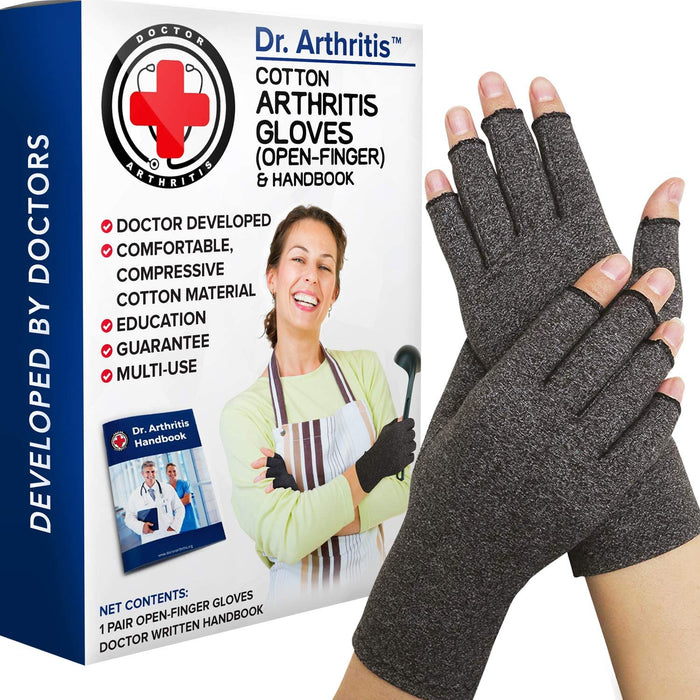
- Compression Gloves (around $17.95) — open-finger design so you can still type, text, and grip. Best for stiff, swollen, achy hands from osteoarthritis or rheumatoid arthritis. Worth repeating: gloves help stiffness and swelling, not nerve numbness.
- Thumb Brace — best for base-of-thumb osteoarthritis, the spot that flares when you open jars or pinch. It rests the joint so the painful motion eases off.
- Copper-Infused Knee Sleeve (around $16.95) — best for knee osteoarthritis, adding warmth and light compression for weight-bearing days on your feet.
- Finger Splints — best for stabilizing a single painful or unstable finger joint, including trigger finger.
For most people the official store and Amazon carry the same range; the official site bundles the handbooks and runs subscribe-and-save, while Amazon is the pick if you want it fast through Prime. None of these is a cure. They are tools to make sore joints more livable while you handle the bigger levers — diet, movement, and your doctor's plan.
Ready to give sore joints some real support?
Dr. Arthritis makes doctor-developed compression gloves, sleeves, and braces, each paired with a condition-specific handbook so you know how and when to use them. Used alongside an anti-inflammatory diet, they help reduce stiffness and swelling so everyday tasks feel less like a fight.
Store Information
Both the official website and Amazon offer convenient purchasing options for Dr. Arthritis.
Frequently Asked Questions
What is the number one food to avoid with arthritis?
Added sugar is the single food most worth cutting if you have arthritis. It directly triggers inflammatory cytokines that worsen joint pain, and it drives weight gain that loads more stress onto weight-bearing joints. That includes obvious sources like soda and candy plus hidden sugar in sauces and dressings. Removing it is also one of the easiest changes to make. For supports that help while you adjust your diet, see Dr. Arthritis.
Do eggs and tomatoes cause arthritis flares?
For most people, no. Eggs and nightshades like tomatoes are common arthritis food myths, and there is little solid evidence they worsen symptoms across the board. A small number of people report personal sensitivity to nightshades, but cutting them is not standard advice. If you suspect one bothers you, remove it for a few weeks, then reintroduce it and compare how your joints feel rather than dropping it permanently on rumor.
How long does it take for an anti-inflammatory diet to work?
Most people who respond notice a difference within two to six weeks. Inflammation does not reset instantly, so give any dietary change a full month before judging it. Keeping a short food-and-symptom log helps you spot your personal triggers. If a month of cutting sugar and fried food changes nothing, your main lever is likely elsewhere, such as movement, weight, or medication, and that is worth raising with your doctor.
Can losing weight reduce arthritis pain?
Yes, especially for osteoarthritis in the knees and hips. Extra body weight multiplies the force passing through weight-bearing joints with every step, and research shows weight loss combined with moderate activity improves arthritis symptoms in older adults. Even modest loss helps. Cutting the sugary and fried foods on the avoid list does double duty here: it lowers inflammation and supports a healthier weight at the same time.
Do compression gloves help arthritis in the hands?
Compression gloves can ease stiffness and swelling from hand arthritis, but they do not cure it. The gentle pressure and warmth help many people with osteoarthritis or rheumatoid arthritis grip and move more comfortably. They will not help nerve-related numbness or tingling, which points to carpal tunnel rather than arthritis. Used alongside an anti-inflammatory diet, doctor-developed options like the open-finger gloves from Dr. Arthritis are a reasonable, low-risk addition.